
Energy-Efficient Data Centers and Smart Grids in Bangladesh

Dial Chowdhury
22 December 2025 . 8 Minute Read
Introduction
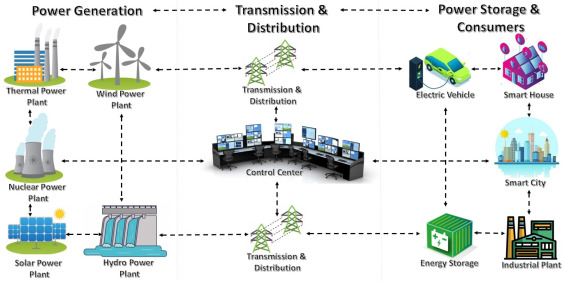
As Bangladesh progresses toward its “Digital Bangladesh” vision, the demand for robust data centers and reliable electricity is rapidly increasing. Data centers are specialized facilities that house servers to store and process digital information, while smart grids are intelligent electricity networks that optimize energy distribution.
Both systems are energy-intensive, but through energy-efficient designs, their carbon footprints can be significantly reduced. For ICT Olympiad students, understanding these technologies opens a pathway to developing sustainable solutions. Imagine a student in Sylhet coding a tool to optimize data center cooling or a Rajshahi developer enhancing a smart grid to minimize outages—these are real-world ICT applications. This article explores how energy-efficient data centers and smart grids function, the tools involved, and their growing role in Bangladesh.
Theoretical Framework
Energy efficiency in data centers and smart grids focuses on minimizing consumption while maintaining high performance. Globally, data centers consume 1–2% of total electricity, primarily for servers, cooling, and networking (International Energy Agency). Smart grids leverage ICT to dynamically balance electricity supply and demand, reducing waste and increasing reliability.
Bangladesh has committed to cutting carbon emissions by 22% by 2030 under the Paris Agreement, making these technologies critical for sustainable development.
Key Concepts:
-
Energy Optimization: Server virtualization and demand-response systems reduce power consumption.
-
Renewable Integration: Solar, wind, and hydropower can reduce fossil fuel dependence.
-
Real-Time Monitoring: IoT sensors track energy usage to detect inefficiencies instantly.
-
Carbon Footprint Reduction: Achieved through energy-efficient designs and renewable adoption.
-
Resilience: Smart grids reduce outages, critical in cyclone-prone regions.
Dr. M. Tamim, a Bangladeshi energy expert, emphasizes ICT’s role in addressing rising energy demand (12% annual growth in 2024) and frequent outages. For students, coding and analytics skills can solve local energy challenges, from cooling inefficiencies in urban data centers to rural energy access.
Tools and Methods
Energy-efficient data centers and smart grids rely on a range of ICT tools:
-
IoT Devices: Arduino, Raspberry Pi, or ESP32 sensors monitor temperature and voltage. Platforms like Node-RED or AWS IoT Core optimize energy usage, reducing waste by up to 15%.
-
Cloud Computing: Platforms like AWS, Google Cloud, Microsoft Azure minimize physical server needs, lowering energy use by 30–50%. Docker improves workload efficiency.
-
Data Analytics & AI: Python libraries (Pandas, NumPy, Matplotlib, Scikit-learn) and TensorFlow predict demand, optimizing cooling and grid distribution.
-
SCADA Systems: Software like Ignition or Siemens WinCC allows BPDB to remotely control and monitor smart grids.
-
Cooling Technologies: Simulation tools such as OpenFOAM optimize airflow, saving 20–30% of energy. Liquid cooling is emerging in Bangladesh’s private data centers.
-
Blockchain: Platforms like Ethereum or Hyperledger track renewable energy credits, ensuring transparent energy trading.
-
Energy Management Software: Tools like Schneider Electric EcoStruxure integrate IoT and analytics for holistic energy monitoring.
BPDB employs SCADA and IoT for grid management, while Dhaka’s private data centers adopt cloud and advanced cooling solutions. Students can leverage these tools to tackle local challenges, from reducing costs in data centers to ensuring grid stability during natural disasters.
Applications and Case Studies
1. Energy-Efficient Data Center in Gazipur
Summit Communications’ Tier III data center in Gazipur uses IoT sensors and Python analytics to dynamically adjust cooling, saving 18% of energy. Virtualization reduces server count and cuts power use by 22%. A rooftop solar microgrid, managed via Node-RED, supplies 12% of energy, cutting 600 tons of CO2 annually—equivalent to planting 14,000 trees.
2. Smart Grid Pilot in Chittagong
BPDB’s smart grid pilot deployed SCADA and IoT meters to track electricity usage. Demand-response programs shift non-critical loads to off-peak hours, reducing waste by 14%. A Flutter app allows residents to monitor usage, receive alerts, and access energy-saving tips. Solar panels in 700 households save 250 tons of CO2 yearly.
3. Cloud-Based Education Platform in Dhaka
BRAC University migrated its e-learning platform to Google Cloud, reducing local server energy use by 75%. Built with Django, PostgreSQL, and React, it serves 12,000 students, cutting commuting emissions by 60 tons of CO2 annually. TensorFlow analytics predict peak usage, saving 15% more energy.
4. Microgrid for Rural Electrification in Rangpur
A North South University team developed a solar-powered microgrid supplying 500 homes. IoT sensors and Hyperledger blockchain manage energy distribution. A Python-based dashboard allows residents to monitor energy credits, cutting diesel generator use and saving 150 tons of CO2 yearly.
Conclusion
Energy-efficient data centers and smart grids are vital for Bangladesh’s digital and sustainable future. By leveraging IoT, cloud computing, analytics, and blockchain, these technologies minimize energy use, integrate renewable sources, and reduce carbon footprints.
For ICT Olympiad students, mastering Python, Arduino, SCADA, or Hyperledger opens doors to addressing real-world energy challenges—from data center inefficiencies to rural power outages. Whether designing smart meters for Class 1 students or developing microgrid apps at the university level, ICT empowers students to contribute toward Bangladesh’s 2030 emissions reduction targets and build a resilient, energy-efficient nation.
Recent blogs
22 December 2025
7 Min Read

06 November 2025
8 Min Read